Where AI workflows actually break
Most AI workflow failures do not come from the model alone. They come from weak boundaries around data, ownership, and review.
It is easy to blame the model when an AI workflow behaves badly. The output is visible, so the model becomes the obvious suspect.
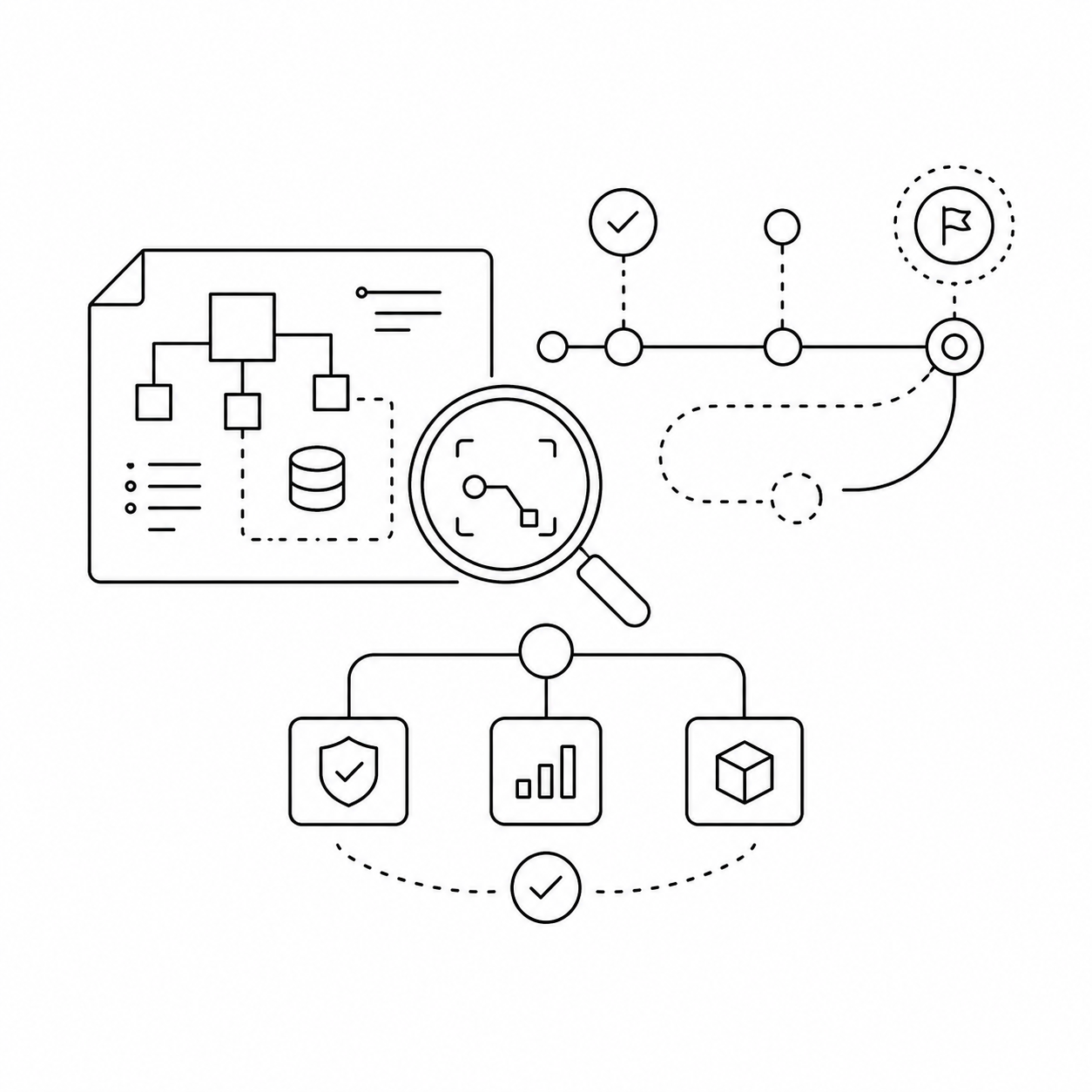
In practice, the break usually happens somewhere else. The workflow has unclear inputs. A retrieval layer returns inconsistent context. There is no stable review loop for edge cases. Ownership disappears after the first launch because the feature sits between product, engineering, and operations.
This is why the strongest AI systems work tends to look less like prompt experimentation and more like systems design. Someone has to define what enters the loop, what qualifies as a good result, and what happens when the output is uncertain.
Models matter, but boundaries matter more. A weak operating model wrapped around a strong model is still weak. A clear workflow around a simpler model can be far more useful because teams know how to inspect, improve, and trust it over time.
If the goal is production value, the question is not just whether the model can do the task. The question is whether the surrounding system can support that task every time the stakes are real.