Architecture decisions before scale
The highest-leverage architecture work usually happens before traffic, complexity, or team count forces the issue.
# Test
The most expensive platform decisions are rarely the ones that look dramatic in the moment. They are usually the quiet defaults that stay unchallenged for too long.
A team picks a deployment pattern because it is familiar. A service boundary gets introduced because it sounds future-proof. A data model is allowed to drift because the first version worked well enough. None of these decisions fail immediately, which is exactly why they become expensive later.
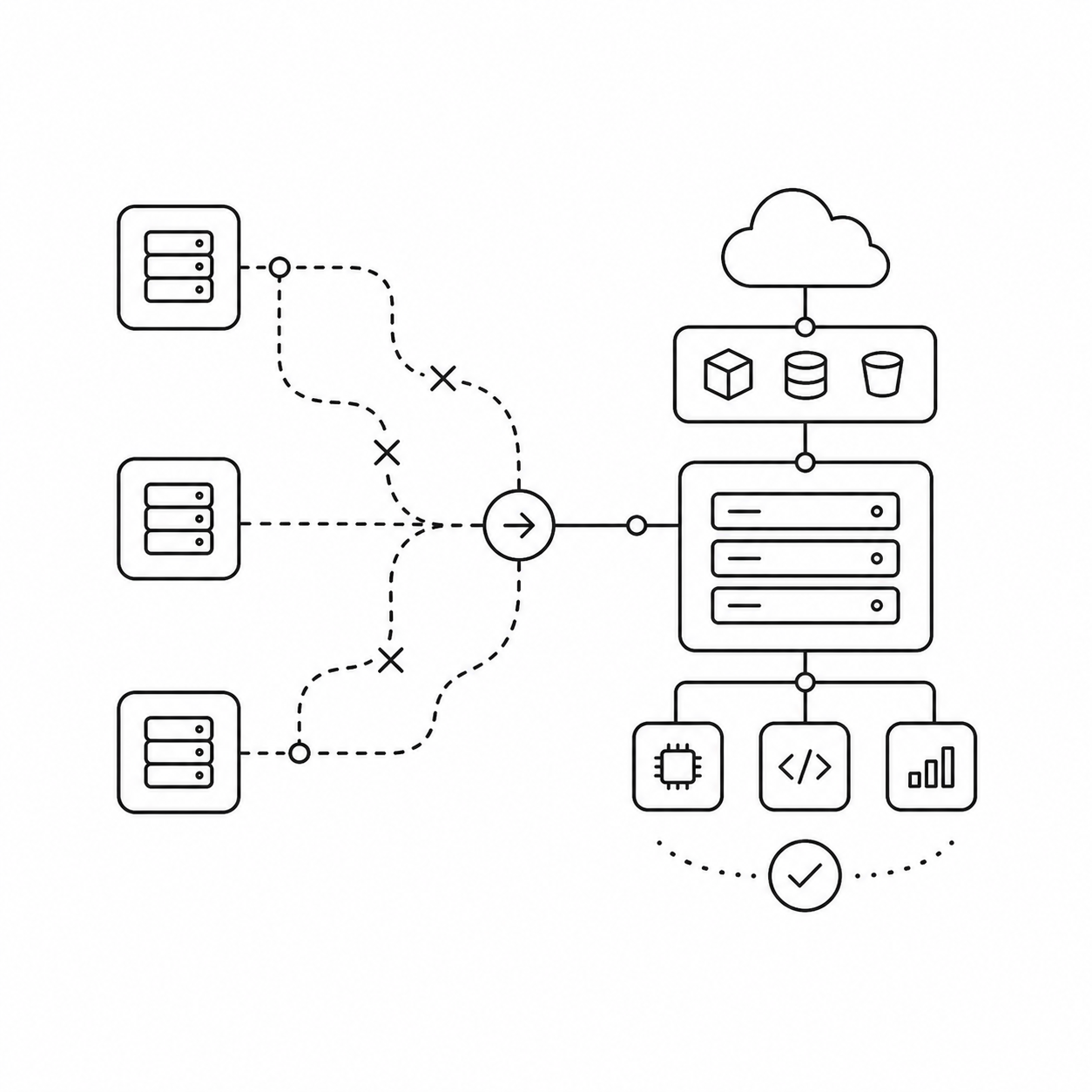
The useful moment for architecture work is the window before scale turns every change into a coordination problem. That is where a team can still simplify interfaces, reduce duplicated ownership, and remove unclear boundaries without negotiating around months of downstream coupling.
Good architecture support is not about adding more diagrams or more abstraction. It is about reducing the number of assumptions a team must carry while building. Fewer assumptions means faster decisions, less defensive implementation, and cleaner recovery when something goes wrong.
If a system is about to grow, the question is not whether it needs more architecture. The better question is which decisions can still be made while the surface area is small enough to move cleanly.